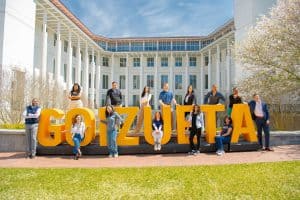
Business is a vehicle capable of delivering meaningful, lasting impact to society. Embracing this view unlocks our collective ability to innovate in the most important ways on the most pressing topics. For more than 100 years, Goizueta Business School has been a training ground for principled leaders and a laboratory for powerful insights. Our history includes an ethos of ethical business, and empowers us all to strive for lifelong progress. By navigating the complex interdependency of business and society, we seek to convene the brightest minds to solve the biggest problems with integrity, ingenuity, and grit.